Wednesday, August 5, 2020

2020 Lammas/Lughnasadh timing

Lughnasadh/Lammas 2020

Lammas (Loaf Mass) or Lughnasadh (Loo-nas-ah) is the third of the four fire festivals held at solstice and equinox midpoints. This one is at the Leo midpoint (15° Leo) twixt Summer solstice (Cancer) and Fall equinox (Libra).

Lugh is a sun deity. Nasad suggests harvest festivals, fairs, and games. It celebrates the midsummer harvest in the Northern Hemisphere (midwinter in the Southern Hemisphere). It is the third of the Celtic fire festivals when the celebration begins on the eve of the day.

Lammas ritualists, students, and the curious might be interested in precise timing for the cross-quarter moment when the Sun reaches the Zodiac degree 15 degrees of the sign Leo, the exact time between Summer Solstice and Fall Equinox. Popularly, Lughnasadh events begin on the evening of July 31 for an August 1 celebration. These times are for the actual cross-quarter moment.

Aug 7 2020 AD GC
01:06:17 AM GMT/UT
02:06:17 AM BST London
Aug 6 2020 AD GC
09:06:17 PM EDT Washington DC
08:06:17 PM CDT Chicago
07:06:17 PM MDT Albuquerque
06:06:17 PM PDT San Francisco
03:06:17 PM AHST Honolulu


For most of history, it was not possible to calculate the exact midpoint in time (above) that marks midsummer. Now it is possible to get that time. It is probable that in other eras, additional factors like a new or a full moon might be part of the decision as to when to light a festival fire. Do not think it wrong to celebrate, to recognize the cross-quarter, at another time.
By Mountainash333 - I handmade this item and I took the photograph at my home. Previously published: eBay and Etsy., CC BY-SA 3.0, https://commons.wikimedia.org/w/index.php?curid=19519028 This shows a 'male' corn dolly or idol that I made. It is fashioned in the same way as the corn mother. I believe it is rare to see one. It represents the Celtic sun god Lugh. The celebration of Lughnasadh or Lammas.

Friday, June 19, 2020

2020 Summer Solstice – Cancer Ingress – Litha

The still moment in the still moment.

You may hear about the three days when the sun stands still at the solstices. The etymology of the word solstice is from Latin, sol, “sun” and stice, past participle of sistere, "stand still.” For three days the sun’s places of rising and setting appear the same. The exact moment of the change of orientation of Earth to our star is calculable and the precise timing is offered here.

21:43:35 (9:43:35 PM) UTC, (UTC +0)
Saturday, June 20, 2020

London, United Kingdom
10:43:35 pm BST (UTC +1)
Saturday, June 20, 2020

New York, NY, USA
05:43:35 pm EDT (UTC -4)
Saturday, June 20, 2020

Chicago, IL, USA
04:43:35 pm CDT (UTC -5)
Saturday, June 20, 2020

Denver, CO, USA
03:43:35 pm MDT (UTC -6)
Saturday, June 20, 2020

Los Angeles, CA, USA
02:43:35 pm PDT (UTC -7)
Saturday, June 20, 2020

State of Hawai’i, USA
11:43:35 am HST (UTC -10)
Saturday, June 20, 2020

The Summer Solstice is known as the longest day and shortest night since it provides the northern hemisphere’s greatest period of a day’s sunlight. At the Summer Solstice, the northern hemisphere assumes its most direct tilt facing into the Sun. Earth's mean obliquity (or axial tilt) is currently 23°26′11.9″ (or 23.43663°) and decreasing.

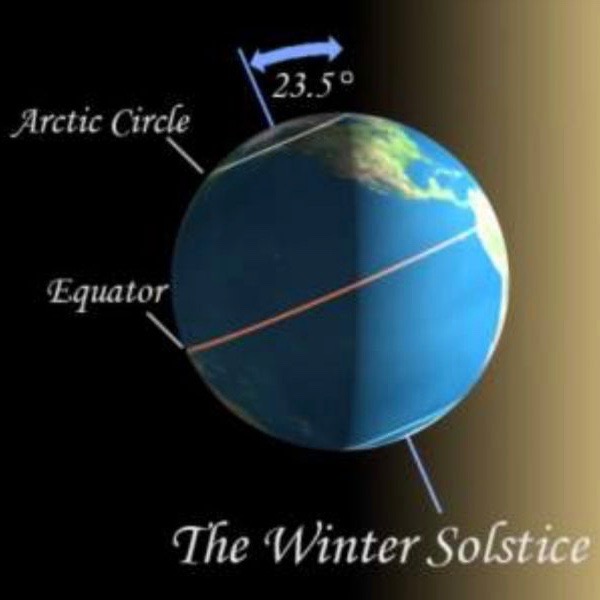
The Sun reaches the maximum north it will on June 20. It will appear to stand still and begin dropping south toward the equator while the length of daylight shortens. (Please see the illustration.) The line the Sun reaches northward is known as the Tropic of Cancer. The Sun at noon is very nearly over Cuba at 23.5° north longitude. At noon on the Winter Solstice the Sun is approximately over Rio de Janeiro, Brazil in the Southern Hemisphere. There it reaches the Tropic of Capricorn at 23.5° South, the furthest South the Sun goes. In either direction when the sun crosses the equator we have an autumn or spring equinox.
via nasa.gov
We are part of the natural world and subject to the changes of the season cycle, responsive to the waxing and waning cycle initiated by earth’s orientation to our star. From Summer Solstice to Winter Solstice, daylight is waning north of the equator and darkness reaches its peak at the shortest day and longest night of the Winter Solstice.
https://i0.wp.com/tymberdalton.com/wp-content/uploads/2014/03/1013534_10152909340180487_41327847_n.jpg?ssl=1
My favorite image for LITHA this year. "This website does not supply ownership information."

Search "Litha" for more on how the Summer Solstice is and has been celebrated for centuries.

“The Solstices then are a time to stop, and to look back on where the half-yearly cycle has brought you, and a chance to look forward and see the direction in which the next half-yearly cycle may lead you; a moment to be conscious of your life's flow and direction; a time to express your hopes and fears, your intentions; to assimilate your learnings and celebrate your achievements; a time to celebrate the light; a time to celebrate the dark; a moment to be conscious of the way this waxing and waning of the Sun affects our lives, and to celebrate this duality and what it means to us.

“When the light is increasing from Winter Solstice to Summer Solstice, all beings are moving out into the light, becoming more individual and independent, expressing their own identity and uniqueness, expanding outwards into the material world. But as the light is decreasing from Summer Solstice to Winter Solstice, nature and life as a whole is integrating itself into a more social way of life, going within, reflecting and becoming more intuitive, expanding into the inner realms - exploring inner wisdom.”

– from Sacred Celebrations by Glennie Kindred

DOWN UNDER

Are you south of the equator? Then WELCOME WINTER! The Summer Solstice in the north is the Winter Solstice in the south.

Some of the discussion of the effect or meaning of the significance of the turning points that the solstices mark does apply north or south, but much of what might be called interpretive is slanted to concerns of the northern hemisphere. There is much to learn by comparisons between how the Sun’s rounding of the track is experienced differently in the two hemispheres.

Let’s look at some of what’s said above by Glennie Kindred. Her first paragraph is 100% applicable north or south for either solstice. Reading on we might wonder will the south be “moving out into the light, becoming more individual and independent, expressing their own identity and uniqueness, expanding outwards into the material world,” while in the north, “as the light is decreasing from Summer Solstice to Winter Solstice,” the experience is that “life as a whole is integrating itself into a more social way of life, going within, reflecting and becoming more intuitive, expanding into the inner realms - exploring inner wisdom”? In any event it is safe to say that the two solstices mark stillness in anticipation of change.

A horoscope calculated for the solstice is one of those used by astrologers for millennia to evaluate the entire Summer season (until the Autumn Equinox or to the Winter Solstice). Astro-meteorologists use it as a “temperature chart,” one of the keys to weather prediction.

Stay safe. Happy Solstice! Blessed Litha!

Tim

Tuesday, April 28, 2020

2020 Beltane timing

2020 Beltane - mid-Taurus
Beltane is the second of the year's four fire festivals.
Beltane is a Pagan Cross-Quarter Day (a Wiccan Sabbat). Some practitioners observe Cross-Quarters at the astronomical time, the midpoint between solstice and equinox, while others adhere to rigid dates. The Cross Quarters are marked in the Tropical Zodiac at 15° of the Fixed Signs (Aquarius, Taurus, Leo, and Scorpio).

Here are the “astronomically correct” (Sun 15° Taurus) times for Beltane 2020:
5 May 2020
12:51:36 AM  UTC
01:51:36 AM  LONDON        BST
08:51:36 PM  NEW YORK        EDT
7:51:36 PM    NEW ORLEANS        CDT
6:51:36 PM    ALBUQUERQUE    MDT
5:51:36 PM    SACRAMENTO        PDT
4 May 2020
2:51:36 PM    HONOLULU        AHST

Some related or coincidental annual events.
April 30    - May Eve
        - Walpurgisnacht (witches' Sabbath, after St. Walpurga presumably to co-opt a pagan festival)
May 1    - May Day - May Poles, May Queens, May-dew, etc.
        - Beltane / Bealtaine - Celtic bonfire festival
        - Roodmas - Mass of the Cross (more church efforts to co-opt a Pagan holy day)
May 4-7    - 2nd Cross-Quarter Day
        The point midway between Spring Equinox and Summer Solstice,             15° 00’ Taurus
May 5    - Cinco de Mayo (Mexico)

Celli Laughing Coyote* has for Beltane, “It officially begins
[“others adhere to rigid dates.”] at moonrise on May Day Eve (April 30), and marks the beginning of the second half of the ancient Celtic year. It is the beginning of the Mother's rule and is one of the two most important Sabbats of the year. The festival is the counterpart of Samhain or All Hollow's Eve, the other time in the year that the veil between the Earth and the Otherworld is thinnest. At Samhain, the Otherworld visits us, at Beltane we can visit the Otherworld.
* I’ve been unable to track down anything about CLC. I likely got this “online” sometime in the 80s or 90s. Celli Laughing Coyote, "Yule - Winter Solstice: The longest night of the year," at http://www.whitemtns.com/ which link returns “404 - File or directory not found.” - TR
 

Walpurgisnacht is a Germanic festival celebrating the start of summer. Walpurgis Night, an abbreviation of Saint Walpurgis Night, also known as Saint Walpurga's Eve, is the eve of the Christian feast day of Saint Walpurga, an 8th-century abbess in Francia, and is celebrated on the night of 30 April and the day of 1 May. The feast commemorates the canonization of Saint Walpurga and the movement of her relics to Eichstätt, both of which occurred on 1 May 870. [The Church regularly planted feast days at times of pagan holy days to distract from those.]
– Wikipedia

screengrab from the video
Faun - Walpurgisnacht (Director's Cut)

Enjoy this evocative video, from the 2016 German music video by FAUN - Walpurgisnacht. The band combines romantic and mythical medieval music quotes with contemporary musical influences to create modern German-speaking medieval folk. The band's unique soundscape illuminates the mythology of the Teutons and Vikings, the result of a skillful mix of folk, medieval sounds, pop, and experimental electronic sound columns.  [Cribbed by TR from a translation.]
https://www.youtube.com/watch?v=U10ftE4XQvo

Wednesday, March 18, 2020

2020 Vernal Equinox timing


Spring Equinox 2020

The Vernal (Northward) Equinox, Start of Spring, Aries Ingress

For the ritually oriented and the curious, here are 2020 Spring Equinox times for Greenwich and the USA.

March 20, 2020
03:49:31 AM UT/GMT
March 19, 2020
11:49:31 PM EDT +4
10:49:31 PM CDT +5
09:49:31 PM MDT +6
08:49:31 PM PDT +7
05:49:31 PM AHST +10:00:00

[Daylight Saving Time, already in effect in the United States, starts in Great Britain and most of Europe on March 29, 2020. For a complete overview go here https://www.timeanddate.com/time/dst/events.html]

Eostre by AngiandSilas
March 19-20 brings the Vernal Equinox, also known as Ostara, or Eostre, or Eastre, named for the Germanic Goddess of spring and dawn. When the Sun's path along the Ecliptic (where the Signs or Zodiac are aligned with solstices and equinoxes) crosses the Celestial Equator from the South to the North we have the Vernal Equinox, the first day of Spring, zero degrees of Aries. The longer nights of the winter season are now in equal balance with daylight. From this point, the length of daylight grows.

All points in the eight-fold year (defined by the astronomical measure of solstices, equinoxes, and the midpoints between those) are marked by human celebrations, holidays, and holy days. Those “coincidental” celebrations are not accidental but knowingly or circumstantially correspond to the astronomical. There are holy days with the Jewish and Christian calendars (also with Chinese, Hindu, and other systems of reckoning) that combine New and Full Moons with solstices and equinoxes. For example, the Full Moon after the Spring (Vernal) Equinox is Passover. The Sunday following that Full Moon is Easter (the preceding Friday is Good).

 Ostara by Johannes Gehrts
The Vernal Equinox is one of two points of the Zodiac that astrologers use for a measure, some prefer to use the Winter Solstice as a starting point for the “year” to follow. Those who chart the Vernal Equinox (Aries Ingress), derive information about at least three, and at most twelve months following. Some mundane astrologers will chart all four, Solstices and Equinoxes, and utilize those charts for a sense of the three months that follow. For those who favor it, the chart for the first day of Spring is said to be in effect for the year until the next Vernal Equinox. It is considered especially strong until the Summer Solstice chart "comes in" in June.

It is good to remember that the Solstices and Equinoxes are the markers for the Zodiac itself (not the constellations with same or similar names).

"Aries is the principle of Cosmic Individuality, which is the truth that everything of which we can speak or even think is a unity and possesses the rights of a unity.  This, in a sense, may also be called Cosmic Strength.  It gives rise to the virtue of Courage, and as its counterpart it has the delusion of egotism, or the belief that the rights of the individual are his only concern, the "struggle for existence" being deemed a permanent fact, beyond which it is not necessary to look.  This produces such faults as arrogance."

- The Zodiac And The Soul, C. E. O. Carter (1887-1968)

Happy Solstice!

Thursday, January 30, 2020

2020 Imbolc-Oimelc timing

2020 Imbolc-Oimelc
3-4 February 2020


TIMING Imbolc or Oimelc

The midpoint between Winter Solstice and Spring Equinox, measured zodiacally with the Sun at 15° 00’ Aquarius, marks the cross-quarter day, called variously, Imbolc, Imbolg, and Oimelc. There is a distinction between the calendar accident when the holiday is generally celebrated, February 1, and the precise timing of the moment. The Winter-Spring midpoint occurs this year, on February 3 or 4, depending on location, in Hawai’i, at 11:03:14 PM AHST. Here’s a list with a few more time zones.

London, United Kingdom
9:03:14 AM GMT-UTC
Tuesday, February 4, 2020

New York, NY, USA
4:03:14 am    EST UTC-5 hours
Tuesday, February 4, 2020

Chicago, IL, USA
3:03:14 am    CST UTC-6 hours
Tuesday, February 4, 2020

Denver, CO, USA
2:03:14 am MST UTC-7 hours
Tuesday, February 4, 2020

Los Angeles, CA, USA
1:03:14 am PST UTC-8 hours
Tuesday, February 4, 2020

State of Hawai’i
11:03:14 PM HST UTC-10 hours
Monday, February 3, 2020

Imbolc or Oimelc (ewe’s milk), is an ancient celebration of the promise of springtime, the festival in the middle of the Celtic winter. It is one of the four cross-quarter days that divide the seasons defined by the solstices and equinoxes. Imbolc between Winter Solstice and Vernal Equinox is marked by megalithic monuments aligned with the day’s sunrise on this and an opposite point, Samhain (Halloween).

As is common with the dates that mark seasonal divisions of the year that correspond to Earth’s alignment with the Sun, Imbolc is linked with other traditions’ holy days (Candlemas, Ground Hog Day, Feast of the Purification, Feast of St. Brigit). The feast of Saint Brigit, St. Brigit's Eve, corresponds with Oimelc like Christmas with the Winter Solstice holiday, Yule.


Statue of Saint Brigit - Saint Brigit's well Kildare

Saturday, December 21, 2019

TIMING THE 2019 WINTER SOLSTICE

2019 Winter Solstice
This one's from The Washington Post
Southward Solstice
Capricorn Ingress
December 22
04:19:21 AM UT/GMT
December 21
11:19:21 PM EST
10:19:21 PM CST
09:19:21 PM MST
08:19:21 PM PST
06:19:21 PM AHST
Graphic from Earth Sky
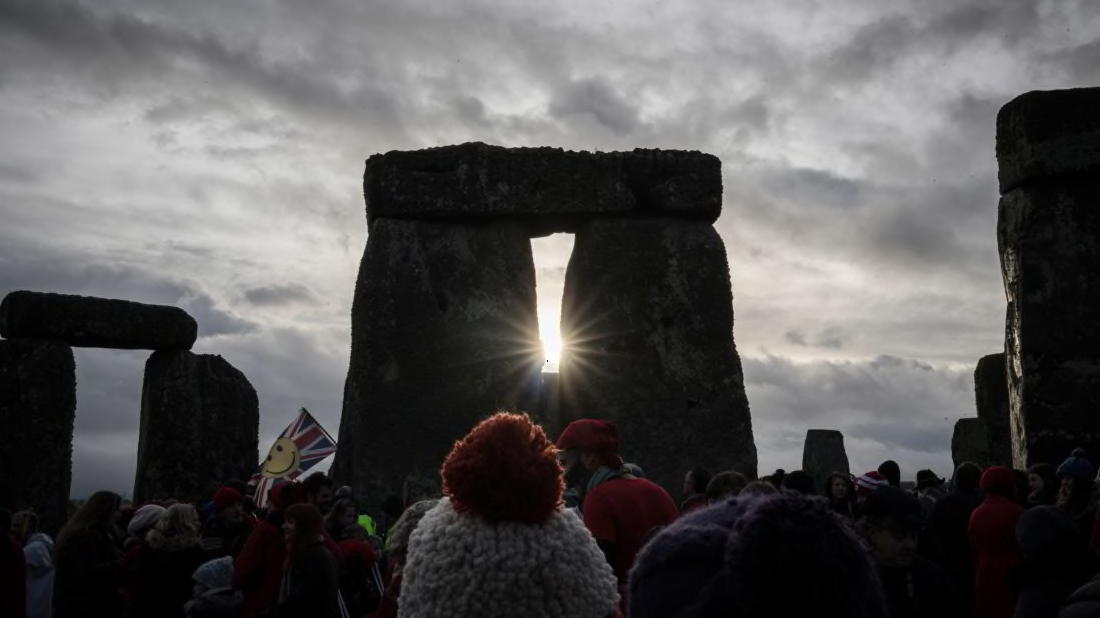
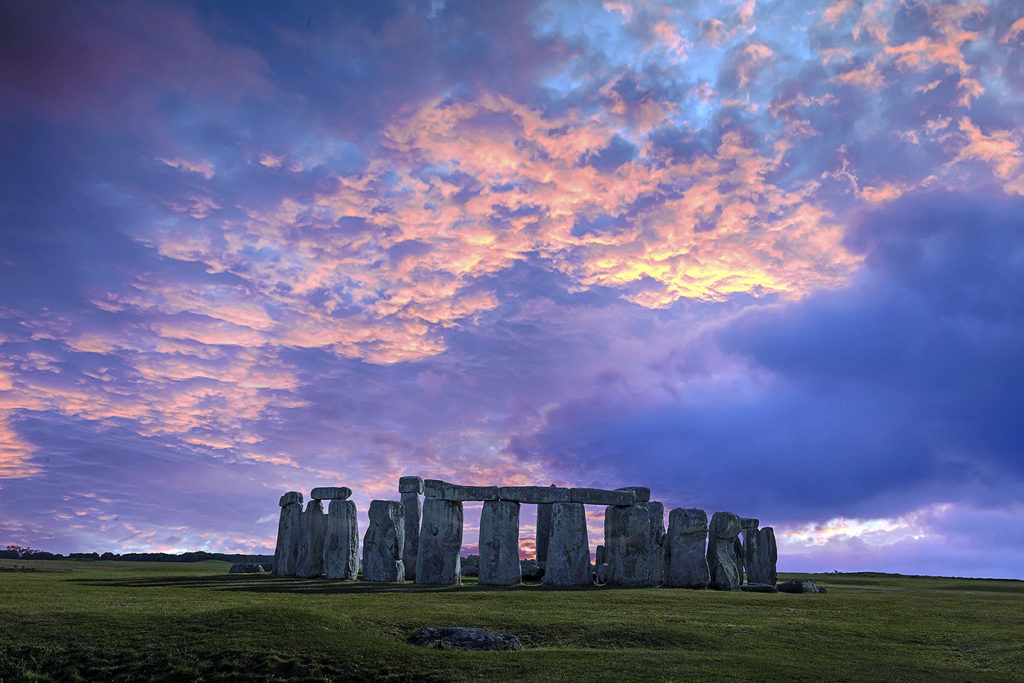
At many places on the planet, maybe on every continent, I don’t know, there are monuments, standing stones, or geological realities, that are or can be used for tracking the course of the sun through the seasons. If you pay attention and live at the same location for some years you will be able to mark and track the sun’s seasonal course from its rise and set points. If you haven’t done that, on the day of the solstice (or thereabouts) make a point of noting the location of sunrise and/or of sunset (with a telephone pole or?). In the northern hemisphere, the point of sunrise will be as far south as it will get (Winter Solstice) and will proceed through the year to rise further and further north until the Summer Solstice when it reaches the point as far north as it will get. From then the sun’s rise will proceed to occur a titch more southerly, back to the Winter Solstice. At the equinoxes, the sun’s rise will be precisely due east and it will set due west. That’s what the sun dagger in Chaco Canyon is about, and the better known Stonehenge in England, marking, and measurement. Where you are north or south of the equator makes a difference, in the southern hemisphere, the Winter Solstice is the Summer Solstice in the north, etc.
Imag

The idea that the sun does not move for three days at the solstices is an observational one, not a physical reality. The precise moment of standstill can be calculated to the second, although visually, the sun may seem to rise in the same place for a few days in a row. Since computer programs can give precise timing, I use it. “Mundane” astrologers use the timing of solstices and equinoxes to make special charts (horoscopes) used to evaluate the time to follow. Some astrologers prefer to chart from the Winter Solstice and others chart the Spring Equinox.

What strikes me about the solstice time is stillness. I use the timing privately to honor the moments. I like to acknowledge the times of solstices and equinoxes with meditation and sometimes with ritual.

The Winter Solstice is the same as the Sun’s entry into the Sign Capricorn (goat or sea-goat). Note that Signs are not the same as constellations. The Signs are located by solstices and equinoxes, the constellations are arranged differently, not even adequately explained by Einstein or more recent astrophysicists.

Happy Holidays!

Tuesday, November 5, 2019

2019 Samhain timing ~ 15° Scorpio

2019 Samhain timing 15° Scorpio
This from history.com, Samhain is celebrated in Glastonbury
The astronomical event from which Samhain arises is midway between Autumn Equinox and Winter Solstice, which is 15° Scorpio in the Tropical Zodiac. Here is the timing for several time zones.

17:24:34 UTC, (UTC +0)
Thursday, November 7, 2019

London, United Kingdom (UTC +0)
05:24:34 pm GMT
Thursday, November 7, 2019

New York, NY, USA (UTC -5)
12:24:34 pm
Thursday, November 7, 2019

Chicago, IL, USA (UTC -6)
11:24:34 am
Thursday, November 7, 2019

Denver, CO, USA (UTC -7)
10:24:34 am
Thursday, November 7, 2019

Los Angeles, CA, USA (UTC -8)
09:24:34 am
Thursday, November 7, 2019

State of Hawai’i, USA (UTC -10)
07:24:34 am
Thursday, November 7, 2019

Samhain or "Summer's End,"(pronounced SOW-in) comes from the “eightfold year,” a division of the year into equal eighths based upon the four solstice and equinox points and the four points midway between those.

This beauty is via Glastonbury Dragons

You may have noticed how many holidays and holy days cluster about the equinoxes and solstices, and the halfway points between those. They make up the eight sensitive points of the season cycle. They are especially noticeable on those parts of the planet that express natural displays like springtime bloom and fall harvest, frozen winter, and hot summer. In the astronomical sense, every part of the planet gets seasons.

The midpoint between Fall Equinox and Winter Solstice in the northern hemisphere (from which most of this information derives) is replete with harvest festivals, county fairs, and the granddaddy of the season, Halloween. The roots of that October 31st holiday are the cross-quarter points (the four midpoints between solstices and equinoxes) long celebrated in Europe by pagans, Celts, and agricultural communities, that bear the Celtic name, Samhain, that’s morphed into Halloween, All Hallows Eve. It is the Scorpio midpoint between Equinox and Solstice

What I am posting is the precise moment of the cross-quarter, not as a correction, a "you’re not doing it right," to those who celebrate Halloween or Samhain at a different time than the actual cross-quarter, but information for those who might like to explore the roots of the seasonal moment in real-time.

Celtic wheel via miro.medium
What follows is my leap to compare the eightfold Lunation Cycle with the eightfold Celtic and Pagan “Wheel of the Year.” The lunar cycle from New Moon to Full and back to New is also studied as an eight-fold cycle. There are names for the eighths of the Lunation Cycle: New, Crescent, First Quarter, Gibbous, Full, Disseminating (that astronomy also calls gibbous, a word meaning humpbacked), Last Quarter, and Balsamic.

I was flabbergasted to find this precise illustration of comparison between the Wheel of the Year and that of the Lunation Cycle. It might be from a book by Demetra Geoge, a book unfortunately not on my shelf to check. In any event whoever is on the same page with me and I love it. I got this via Pinterest - The Lunation Cycle - Claire Higham - Saved from The astrological lunation cycle with astrologer Demetra George.
At Balsamic degrees, 315° to 360°/0° we’ve reached the closing stage of the Moon-Sun cycle. Consider the New Moon not just as a beginning but at the end of a cycle too. The last eighth of the lunar cycle, includes a process of consolidation and of something like loss or failure (in a mechanical, not a moral sense), a kind of enough, what’s next? It’s something like what Tibetan Buddhists call a bardo. You might substitute the word bardo for balsamic, the bardo including the 45 degrees before a New Moon, the pulse of one of the major rhythms of Earth.
Via Zodiac Arts dot com This is a day in the life of the balsamic moon.

There may be something unsettled about this last eighth of the year (which count will be under dispute depending on the beginning of the year at Winter Solstice or at the Spring Equinox – discussion for another time). If we compare the Lunation Cycle with the Wheel of the Year, then this last eighth of the year might be a balsamic time, a time of releasing what is no longer viable and that might pose a hindrance to growth, and a time for reaching to what is new, fresh, and untried for the year to come.

It’s only been a few years that I’ve had the use of computer programs that let me easily and precisely calculate the moments of astronomical events. I like to recognize those moments, to explore them as I do many astrological factors. Those moments, solstice and equinox were first noted and calculated by astrologers as long as a few thousand years ago. They would be so jealous of how easy it is to calculate these things by computer.

(The first Tuesday in November, Election Day in the US, coincidentally falls near the Samhain cross-quarter.)

Rights to the images belong to their respective owners and I will quickly honor any removal requests. The rest is copyright © Tim Rubald 2019.

Timing the Autumn (Fall) Equinox 2023

Timing the Autumn (Fall) Equinox The Autumnal (Southward) Equinox, the entry of the Sun into the Sign of Libra (Sun at 0° Libra), in a few...